Introduction
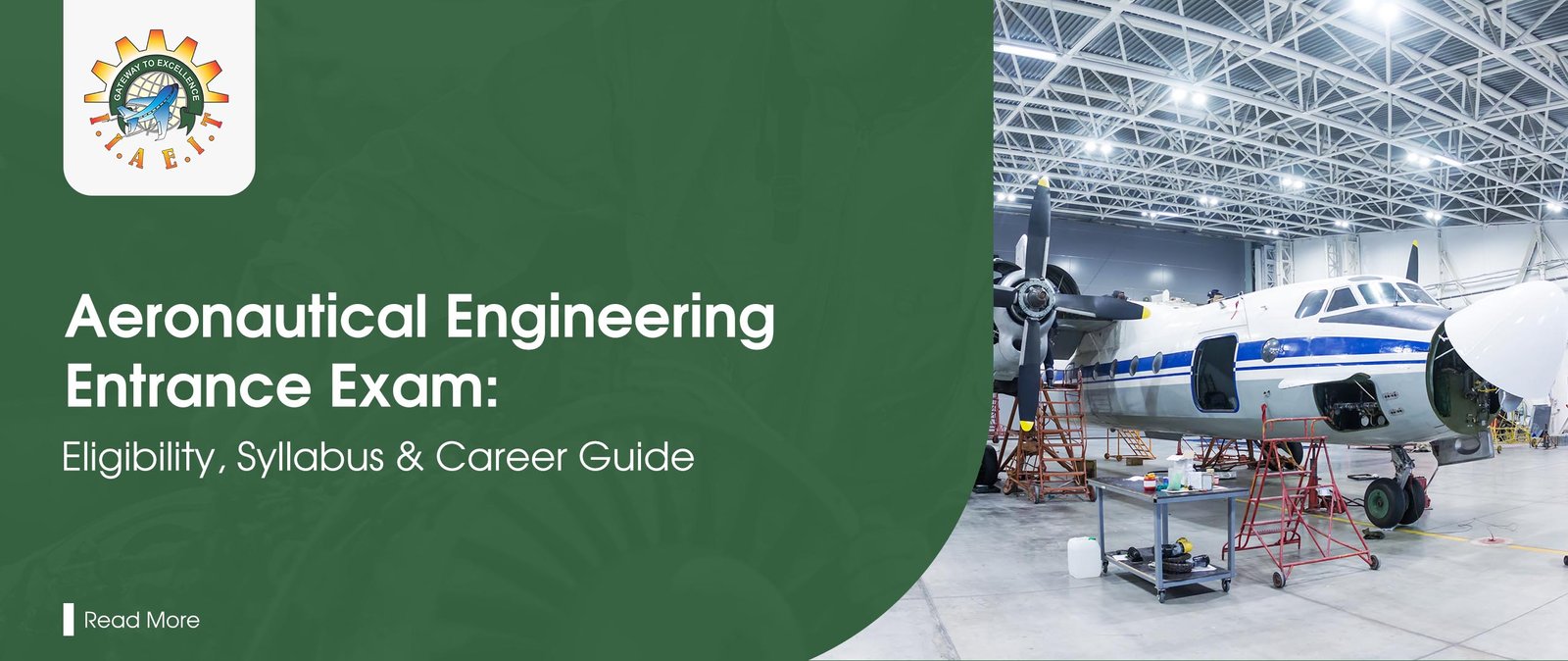
Aeronautical engineering is one of the most prestigious and technically demanding branches of engineering, focused on the design, development, testing, and maintenance of aircraft and aerospace systems. With India’s rapidly expanding aviation, defence, and space sectors, the demand for skilled aeronautical engineers is rising steadily.
To enter this exciting field, students must clear an aeronautical engineering entrance exam, which serves as the primary gateway to top institutes offering undergraduate and postgraduate programs in aeronautical engineering.
This guide provides a complete overview of the aeronautical engineering entrance exam, including eligibility, syllabus, admission process, and career scope.
Entrance Exam for Aeronautical Engineering in India
1) National-Level Engineering Entrance Exams
These are accepted by many engineering colleges across India:
- JEE Main (for NITs, IIITs, and many private universities)
- JEE Advanced (for IITs Aerospace Engineering is available in select IITs)
- CUET (UG) (some universities may accept it for engineering-related admissions, depending on the institute)
2) State-Level Engineering Entrance Tests
These are conducted by state governments and are mainly for colleges within that state:
- MHT CET – Maharashtra
- KCET – Karnataka
- WBJEE – West Bengal
- AP EAPCET – Andhra Pradesh
- TS EAMCET – Telangana
- KEAM – Kerala
- GUJCET – Gujarat
- And More
3) Institute-Specific Entrance Exams (Private Universities)
Many private universities conduct their own exams for engineering admissions:
- SPACE CET – Conducted by IIAEIT and Approved by IIAEIT
Aeronautical Engineering Entrance Exam Syllabus
The aeronautical engineering entrance exam syllabus is largely aligned with the Class 11 and Class 12 science curriculum. While exact topics may vary across exams, the core subjects remain consistent.
Physics
- Laws of motion
- Work, energy, and power
- Thermodynamics
- Waves and oscillations
- Optics
- Electrostatics and current electricity
- Modern physics
Mathematics
- Algebra and matrices
- Trigonometry
- Calculus (limits, derivatives, integrals)
- Coordinate geometry
- Probability and statistics
- Vector algebra
Chemistry (for certain exams)
- Physical chemistry
- Organic chemistry
- Inorganic chemistry
Strong conceptual clarity and regular practice are essential to perform well in an aeronautical engineering entrance exam.
How to Become an Aeronautical Engineer After 12th
Students aspiring to become aeronautical engineers can follow this step-by-step pathway:
- Complete Class 12 with Physics, Mathematics, and Chemistry
- Prepare for and qualify in an aeronautical engineering entrance exam
- Secure admission to a recognised institute offering a BTech or BE in Aeronautical Engineering
- Gain practical exposure through internships, workshops, and industry projects
- Opt for higher studies or specialised certifications for advanced career opportunities
This structured approach helps students build both technical expertise and industry readiness.
Aeronautical Engineering Admission Eligibility
The aeronautical engineering admission eligibility criteria generally include:
- Completion of Class 12 or equivalent from a recognised board
- Mandatory subjects: Physics and Mathematics (Chemistry preferred)
- Minimum aggregate marks (usually 50–60%, varying by institute)
- Qualification in the relevant aeronautical engineering entrance exam
- Age and medical fitness criteria for certain aviation-focused institutes
Eligibility requirements may differ slightly depending on the institution and exam.
Application Process for Aeronautical Engineering Entrance Exams
The application process for aeronautical engineering entrance exams typically involves the following steps:
- Online registration on the official exam or institute website
- Filling out personal, academic, and contact details
- Uploading required documents (photograph, signature, mark sheets)
- Payment of the application fee
- Downloading the admit card once released
- Appearing for the entrance exam and participating in counselling or interviews
Students are advised to track application deadlines carefully to avoid missing opportunities.
Best Colleges for Aeronautical Engineering in India
India is home to several reputed institutions offering aeronautical engineering programs with strong academic and practical exposure. The best colleges for aeronautical engineering in India are known for:
- Industry-aligned curriculum
- Advanced laboratories and simulation facilities
- Experienced faculty with aerospace expertise
- Strong internship and placement support
- Collaborations with aviation, defence, and space organisations
Choosing the right institute plays a crucial role in shaping a successful aeronautical engineering career.
Career Scope After Aeronautical Engineering
The career scope after aeronautical engineering is vast and continues to grow with technological advancements. Graduates can explore opportunities in:
- Aircraft design and manufacturing
- Airline operations and maintenance
- Defence and military aviation
- Space research and satellite technology
- Unmanned aerial vehicles (UAVs) and drones
- Research and development organisations
- Higher education and academic roles
Job roles include aeronautical engineer, flight systems engineer, aircraft maintenance engineer, aerospace analyst, and research engineer.
Why choose SPACE CET for the Aeronautical Engineering Entrance Exam?
SPACE CET is a specialised entrance exam conducted by IIAEIT for students aspiring to build careers in aeronautical and aerospace engineering. Unlike general engineering exams, SPACE CET is designed to assess aptitude in Physics, Mathematics, and engineering fundamentals relevant to aviation-focused programs.
Through SPACE CET, students gain direct access to industry-aligned aeronautical engineering education, practical training, and a transparent admission process tailored for aviation and aerospace careers.
Conclusion
Cracking an aeronautical engineering entrance exam is the first step toward a challenging yet rewarding career in aviation and aerospace.
Equipped with the right preparation strategy, strong fundamentals, and informed college selection, students can unlock opportunities in one of the most advanced engineering domains.
As India continues to invest in aviation infrastructure, defence manufacturing, and space exploration, aeronautical engineering remains a future-ready career choice for ambitious science students.